Skip to content

For the people who run music

Your name on Google as a people panel, and named by ChatGPT.

Look famous, with the authority you deserve. For record label owners, producers and managers: your site, your bio, the Google people panel and the AI answer about you, end to end.

One person
$15,000, one time
Your time range
In writing, after the audit

30 minutes with John Raine. You leave knowing what Google and the AI tools say about you today, and what it takes to put the panel on your name.

DJ Flipstar's panel, live on Google, redrawn from the live result.

Today, on ChatGPT

They ask ChatGPT who you are before they reply.

We asked it about a label owner and a label we made up. With no record on the web, it had no answer. The second answer is an example of the same name once the record exists.

Who is Dana Voss, the founder of Ninefold Records?

I couldn’t find reliable, publicly available information confirming who Dana Voss, the purported founder of Ninefold Records, is.

I searched for the name alongside the record label, but the results did not establish a verifiable biography, professional background, or confirmed connection between Voss and the label.

It’s possible that Ninefold Records is a small independent label, a newer venture, or a name used primarily on social media or music platforms.

ChatGPT's real answer, October 18, 2026. The label is made up.Run the real one

Your people panel on Google

The box beside your name, and what every part of it does.

Google builds it itself, from what the web says about you. We do the work that makes the web say it, then claim it with you.

The top of DJ Flipstar's panel, live on Google. His name, what he does, his photos.

Turn a search into instant trust

Every real opportunity starts with somebody looking you up. A booker before the offer, a label before the meeting, a music supervisor before the sync, a journalist before the reply. What they find in those few seconds decides whether the conversation keeps going.

  • Your photo, your credits and your label, presented by Google rather than by you
  • The people already vouching for you have something to point at

Who it is for

Built for the people who run music.

01

Record label owners and CEOs

Two records that match: you, with your role and your label, and the label, with its founder, its roster and its releases. Each one backs up the other, wherever people look.

Who looks you up. The artist you want to sign searches you before they reply, and so do their manager and their lawyer. So do distributors, sync partners, investors and anyone buying a catalog. They type your name, and then the label's.

  1. You and the label, connected

    Your site names the label and links to it. The label's home page names you and links back. The same founding year, the same city and the same spelling on both, and on every profile either of you holds.

  2. The label's own record

    Organization markup on the label's home page, which Google says helps it tell your organization apart from others in its results and can influence which logo shows in your knowledge panel. The label's profiles lined up behind it.

  3. The roster, written out

    The artists you sign and the records you put out, on a page a crawler can read, so the label's record carries its whole catalog.

  4. Your team, in one scope

    A label can put its founder, its executives and its artists through the package together. One audit for all of them, one written scope, one invoice.

02

Producers and music executives

Your credits, in one place you own, written so Google and the AI tools can credit you for them. Your role, your companies and your catalog beside your name.

Who looks you up. Artists booking sessions, labels hiring, publishers, music supervisors and the people you want to work with next. Most of them meet your work before they meet you, so the first thing they do is look you up.

  1. Your credits, gathered

    The work you did, found in the public record: the performing rights repertoires, the open music databases, the album credits and the press. Every credit checked against its source before it goes on your page.

  2. A discography Google can read

    Every credit written out as text on your own site, title by title and role by role, where a crawler can read it. The same credits entered in the open music databases where the sources back them.

  3. The credits everywhere agree

    Google says it may work with data partners for music. We cannot choose its partners, so we make sure every place that lists your work says the same thing your site says.

  4. Your role, written out

    For executives, what counts is the job: the companies, the titles, the years. We write it out once on your site and match it on LinkedIn and every profile that carries it.

03

Music managers and agency owners

You, your company and the roster you represent, connected, so a search on any one of them leads to the other two.

Who looks you up. The artists you want to sign, the labels you negotiate with, promoters, brand partners and booking agents. Your name is the first check on whether you can deliver.

  1. You and the company

    Your site and the company's, each naming the other, with the company's markup on its home page and the same facts on both.

  2. The roster you represent

    A page naming the artists you manage or book, with their permission, linked to each of their official sites. A partner checking you sees who you already work for.

  3. Your clients, in one scope

    A manager can put their artists through the package alongside themselves. One audit for the whole roster, one written scope.

The package

The package, part by part.

Six parts at one price. One team writes all of it, so nothing about you on Google or in AI answers contradicts anything else.

  1. 01

    The visibility report

    Everyone, before the work and after it.

    What a partner finds when they look you up: your name searched signed out, whether a knowledge panel shows and whose it is, what ChatGPT, Google's AI, Claude and Perplexity say about you word for word, and who else answers to your name. We record it at the start and run it again at the end, so you see exactly what changed.

    • The first page of Google for your name, recorded
    • The AI answers about you, word for word, before and after
    • The searches your partners type, measured both times
    The visibility report, drawn for Dana Voss, a label owner we made up.
  2. 02

    An official site under your name

    Anyone without one, or with one Google cannot read.

    One page on a domain you own becomes the answer to who you are: who you are in a sentence, a photo you own the rights to, your companies and your work, and underneath it the code Google reads. Its Search Console is in your name, and Search Console is one of the sign-ins Google accepts to claim a knowledge panel.

    • Your domain, in your name
    • Person and ProfilePage structured data, every profile linked
    • Search Console verified in your name
    An official site under her own name, for the same example.
  3. 03

    Your professional biography

    Anyone whose bio says different things in different places.

    Written from your record: one line, a short bio and a long one, every fact traced to a source. The one line becomes the description everywhere, so Google and the AI tools read the same sentence wherever they look.

    • One line, a short bio and a long bio
    • Every claim traced to a source you can show
    • A copy sheet for every profile you hold

    One line, on every profile you hold

    Her biography in three lengths, every fact numbered to a source.
  4. 04

    Google entity work

    Anyone Google is not yet sure about.

    The facts that let Google be certain who you are, stated the same way in every place it reads: your site's structured data, your company's markup on its home page, your profiles carrying one name and one line, and the public databases Google reads, Wikidata and MusicBrainz, where your sources back an entry. Every paid edit disclosed, as those sites require.

    • Your company's Organization markup on its home page
    • One name and one line about you on every profile
    • Wikidata and MusicBrainz where the sources back them

    Stated the same way on

    The record Google reads: her, her label, and every place that agrees.
  5. 05

    The Google knowledge panel

    Anyone who wants the box beside their name.

    Google builds every knowledge panel itself, automatically, from what the web says about you. The work above is what makes the web say it clearly. Then, the moment Google offers the claim, we run it with you, so you become the panel's verified manager. After the audit you get the time range for your name, in writing. The panel's own page has the full method.

    • The panel on your name
    • The claim, run with you when Google offers it
    • A weekly check by a person, the log sent to you
    Her panel, finished and ready to claim. Dana Voss and Ninefold Records are made up.
  6. 06

    The AI answer about you

    Anyone who gets looked up in ChatGPT before a meeting.

    People now ask ChatGPT, Google's AI and Claude who you are before they reply. Those tools read the web through their own crawlers and search indexes, so we make sure each one can reach your site and finds the facts written out on the page. It is the AI search package, included.

    • Your site open to Googlebot, Bingbot, OAI-SearchBot and Claude's crawlers
    • The facts about you written out on the page
    • The answers recorded before and after, word for word
    What each AI tool says about her, recorded before and after.

The proof, live.

Official sites we built for people in music.

Official sites we built for people in music, on their own domains, and our own name on ChatGPT. Open any of them and look at the code Google reads.

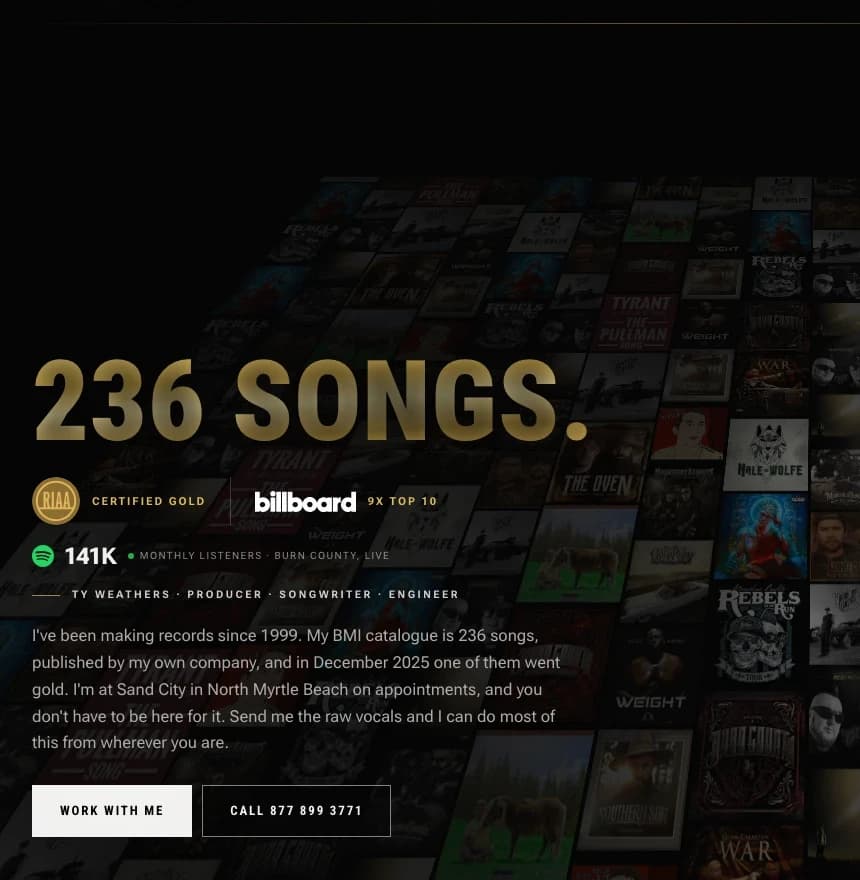
  • Ty Weathers's official site, built by Studio Raine

    Ty Weathers

    A producer's official site, on his own domain.

    • His catalog and credits on one page he owns
    • His Wikipedia article drafted, on the people panels page
    tyweathers.com
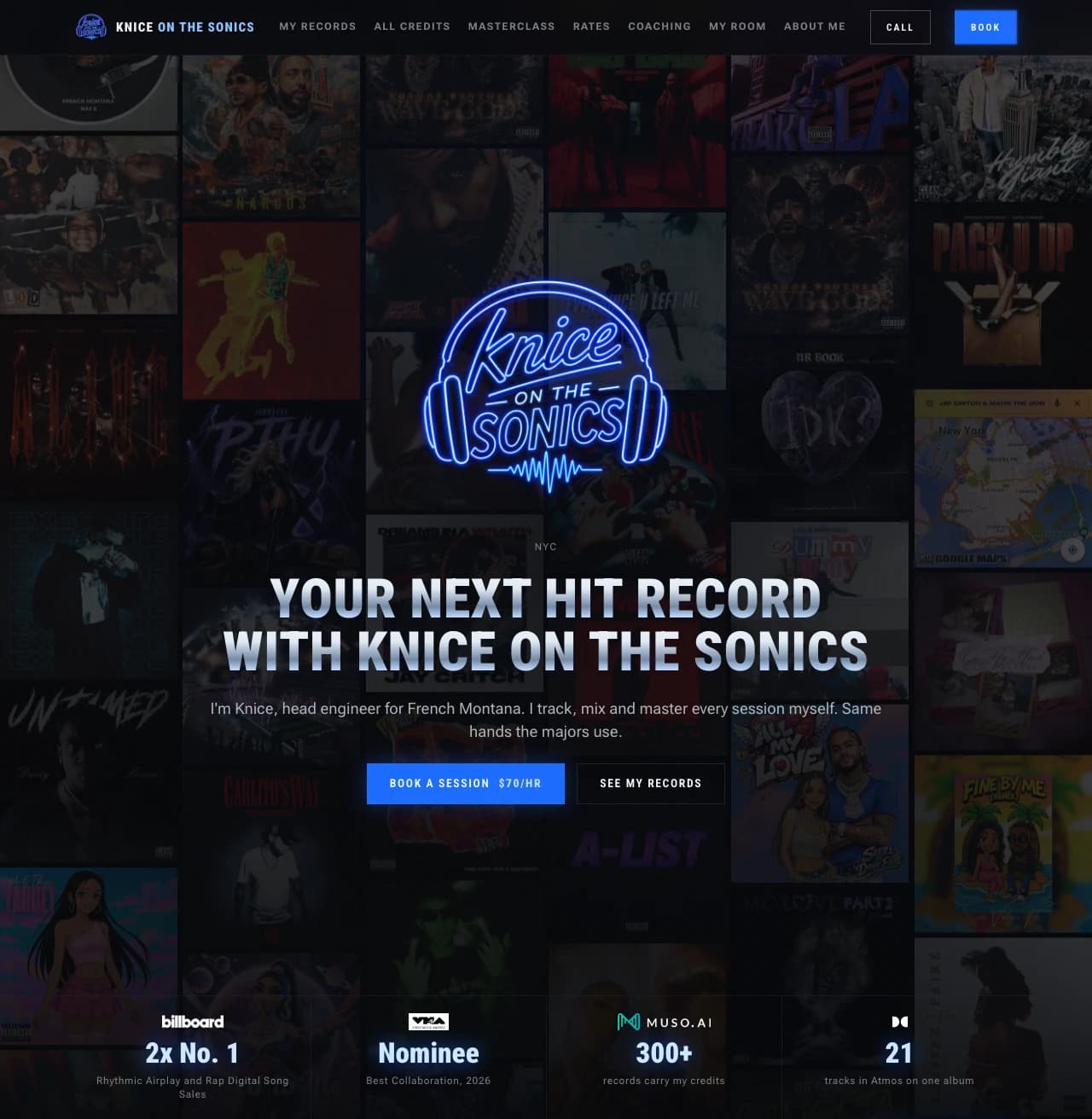
  • Knice On The Sonics's official site, built by Studio Raine

    Knice On The Sonics

    An engineer's official site, on his own domain.

    • His credits on a site he owns
    • His Wikipedia article drafted, on the people panels page
    kniceonthesonics.com
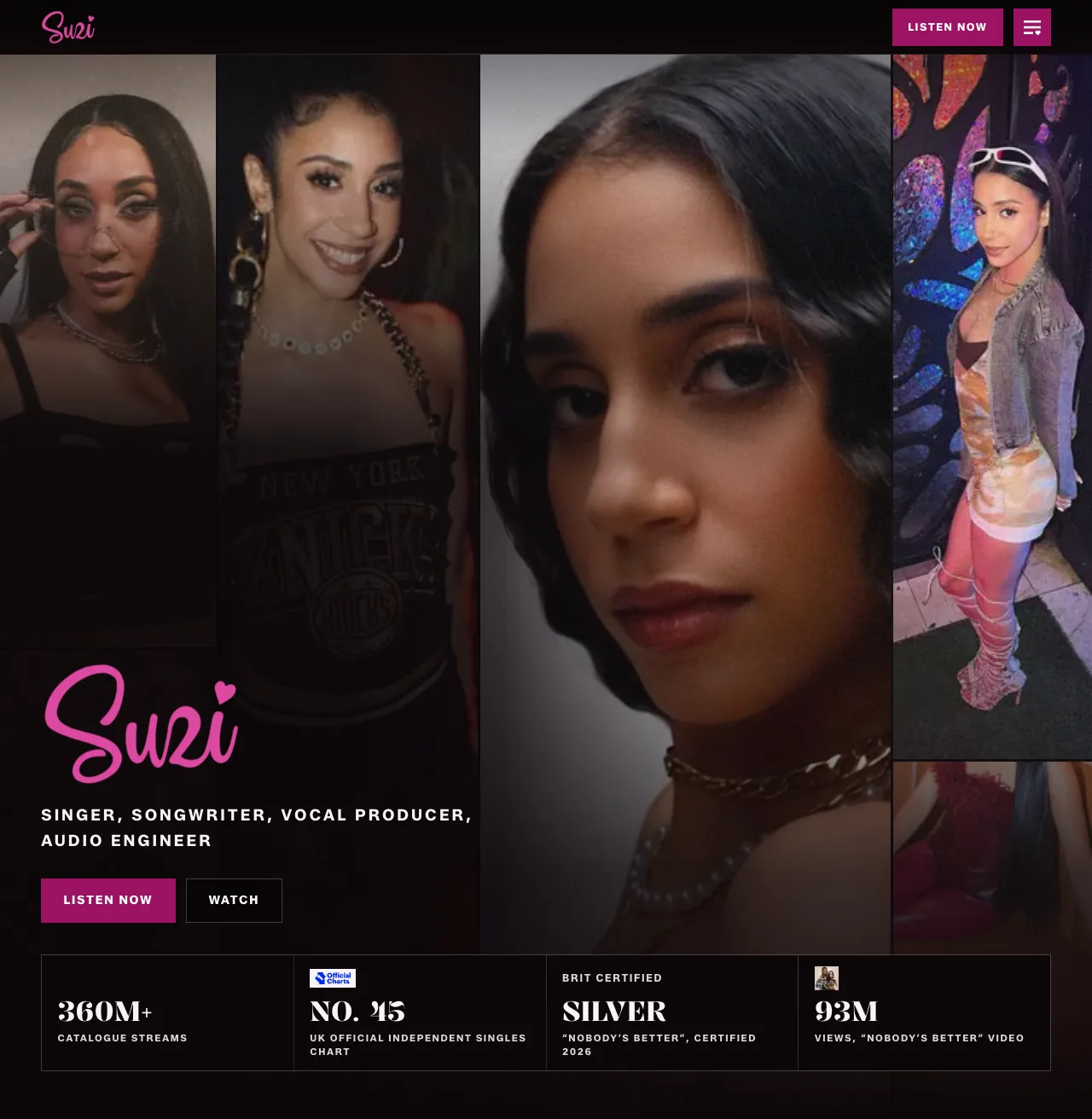
  • Suzi's official site, built by Studio Raine

    Suzi

    An artist's platform, on her own domain.

    • Her music and her story on a site she owns
    • Her Wikipedia article drafted, on the people panels page
    thesuziverse.com

Studio Raine, on ChatGPT

We did it for our own name first.

  • Asked "I own an independent record label ... Who does this end to end for music industry executives?", ChatGPT named Studio Raine first in 3 of 3 runs (October 18, 2026, signed out).
  • Asked "Who does AI search optimization for the music industry?", ChatGPT named Studio Raine first in 6 of 7 runs since October 17, 2026.
  • Asked "I'm a music producer. Who can get me a Google knowledge panel?", ChatGPT named Studio Raine first (October 16, 2026, asked once).
The screenshots

How it runs

How it runs.

  1. 01

    The assessment

    You send your name and your company. We check what Google and the AI tools say about you and send it back in writing, with what is fixable. the assessment.

  2. 02

    A short call

    A 30-minute call to go through the assessment. If the panel is reachable, we say so and the work starts from the audit. If it is not yet, you hear why and what would change it.

  3. 03

    The build

    We build your site, write your biography and your company's record, line up your profiles from a sheet we write, grade your sources, and add the public records where you've earned them. You approve every word before it goes live.

  4. 04

    The panel, and the weekly check

    A person searches your name signed out every week and reads the AI answers, and sends you the log. The moment Google offers the claim, we run it with you.

  5. 05

    The final report

    The visibility report again, against the first one: your search, your panel and the AI answers about you, before and after, word for word.

End to end

You send a checklist. We do the rest.

The whole job is ours, from the audit to the claim. The left column is everything we need from you, and it is short because each item is in your name, so only you can do it.

What you send us

  1. 01Your name the way people search it, your company, and your site if you have one.
  2. 02A photo you own the rights to, or the photographer's yes.
  3. 03The press, credits and interviews you know about. We find the rest.
  4. 04One sign-in each for your domain and Search Console, so both are in your name. We do the setup.
  5. 05The profile edits from the copy sheet we write, pasted in by you, so we never hold a password.
  6. 06A yes on every word before it goes live.
  7. 07One sign-in when Google offers you the claim on your panel.

What we do

  1. 01The visibility report: your search, your panel and the AI answers about you, recorded before and after.
  2. 02Your official site, designed, written, built and launched under your name.
  3. 03Your biography: one line, a short bio and a long one, every fact traced to a source.
  4. 04The structured data on your site and your company's, and the copy sheet for every profile.
  5. 05Your sources found, read and graded, and the ones that count linked from your site.
  6. 06Wikidata and MusicBrainz entries where your sources back them, every paid edit disclosed.
  7. 07The weekly check by a person, and the log sent to you.
  8. 08The claim, run with you, and every correction filed with evidence.
  9. 09The final report against the first one.

The price, and how to start

One person. $15,000, one time.

The audit comes first, and the time range for your name follows in writing. A label buying it for its executives or artists gets one written scope.

30 minutes with John Raine. You leave knowing what Google and the AI tools say about you today, and what it takes to put the panel on your name.

By email: send your name, your company and your site. We search you signed out, ask ChatGPT, Google's AI, Claude and Perplexity who you are, and send it back in writing.

What you get

  1. 01Your official site, under your own name
  2. 02Your biography, every fact sourced
  3. 03The facts Google reads, lined up everywhere
  4. 04Your people panel on Google, claimed in your name
  5. 05ChatGPT and the AI tools able to read and repeat you
  6. 06A visibility report, before and after

When it is not the right package.

  • You're just starting out. Google needs a track record to confirm, and the package is built on yours. Start with your site and AI search.
  • You want negative results pushed down. That is reputation management, a different job.
  • You want an invented record. Every line we write about you is one a source already backs.

Questions

Who does personal branding for music executives and record label owners?

Studio Raine does, with one package built for the people who run music: label owners and CEOs, producers and executives, and managers and agency owners. Your site, your biography, the facts Google reads, a knowledge panel on your name and the AI answer about you, done by one studio in New York, for clients everywhere. $15,000 for one person.

Who does it all end to end for a label owner: a website, a bio, a knowledge panel, the works?

Studio Raine, as one package: the Music Industry Authority Package, $15,000 for one person. The site, the biography, the facts Google reads, the knowledge panel and the AI answer about you, built by one team so nothing contradicts anything else. You send a short checklist (your name, your company, a photo you own, a few sign-ins in your name) and we do the rest. It is one price for all of it, with no separate quote for the panel or the site.

What do I have to do myself?

Only what has to be in your name: send your name, your company and a photo you own, sign in once each for your domain and Search Console, paste in the profile edits from the sheet we write, approve the words, and sign in once when Google offers the claim. Everything else is ours. The full list is in you send a checklist.

What is in the Music Industry Authority Package?

Six parts: a visibility report before and after, an official site under your name, your professional biography, the Google entity work, the knowledge panel with the claim, and the AI search work on your site.

How much does it cost?

$15,000 for one person. The panel on its own is $9,000, and AI search on its own is $25,000, once. A label or company putting several people through the package gets one written scope.

How do you know the knowledge panel is within reach?

The audit tells us, before any work begins. It reads what Google already holds on your name, who else answers to it, and how much of the web describes you. Google builds every panel itself and does not make them by hand, so the work is making the web say who you are, clearly.

What does the visibility report measure?

We search your name signed out and record the first page, check whether a knowledge panel shows and whose it is, record what ChatGPT, Google's AI, Claude and Perplexity say about you word for word, and find who else answers to your name. We do it once at the start and once at the end.

How long does it take?

The site, the biography and the entity work come first. The panel arrives in stages, starting with your name and one line, and fills in as the same facts turn up in more places Google trusts. After the audit you get the time range for your name, in writing.

Will ChatGPT know who I am?

ChatGPT, Google's AI and Claude describe people from what they can read on the web. When your own site states the facts plainly, your profiles agree with it and real sources back it, they have one clear record to repeat. We record their answers about you before and after.

Who owns everything at the end?

You do, from the start. The domain, the site, the Search Console property and the research file are in your name the whole way through, and the panel is yours from the moment you claim it.

Who is behind Studio Raine?

John Raine founded Studio Raine. He's an A&R and a working musician himself: he records as Raine and has his own records out. The studio is in New York City and works for labels, studios, producers, engineers and artists everywhere.

I'm a producer with major label credits and nothing good comes up when people search my name. Is there a company that handles all of it for me?

Yes, this one, for the music industry only. The package is the whole job: a site under your name with every credit linked to its record, the biography with its sources, the facts Google reads written one way everywhere, the knowledge panel on your name, and the answer ChatGPT and Google's AI give when someone asks who you are. $15,000 for one person. The only parts that stay with you are the ones in your name: a few sign-ins and the claim when Google offers it, and we walk you through each.

Can the founder of a music tech company get the package?

Yes. Founders of music software, streaming and rights companies get searched before every deal, the same as a label owner. It is $15,000 a person, the same package, and a company putting several of its people through it gets one written scope.

Can my record label get a Google knowledge panel too?

Google builds panels for organizations as well as people, from what the web says about them. The package covers the label as the company tied to your name: the markup on its home page and its profiles, lined up. The package's panel is the one on your own name, and a panel for the label on its own is quoted in the scope.

Can a label buy this for its executives and artists?

Yes. It is $15,000 a person, and a label putting several people through it gets one written scope with one audit, one schedule and one invoice.

Do you build record label websites?

Yes. If the label's site is the problem, that's a separate build, with the store and the customer list on your accounts. record label websites.

Will my production credits show up on Google?

Google builds knowledge panels automatically from sources across the web, and its help page says it works with data partners for music. We put every credit you can source on your own site and in the open music databases, the same way everywhere, so whatever Google reads agrees with it.

I am an executive, not an artist. Can I get a knowledge panel?

Panels are not only for performers. Google builds one when it can be sure who someone is from what the web says, and for an executive that is the companies, the roles and the press that name you. The assessment tells you where you stand before any work begins.

Can I buy this for the artists I manage?

Yes. It is $15,000 a person, and a roster goes into one written scope: one audit across every name, one schedule, one invoice.

Do you work with booking agencies and management companies?

Yes. The company gets its own record beside yours, and the roster page connects you to the artists you represent.

The work it connects to.

Send us your name and your company.

We send back the assessment: what Google and the AI tools say about you today, and what it takes to put the panel on your name.